


You used to get on TV with just a banana and a dream. Think of what they took from us.
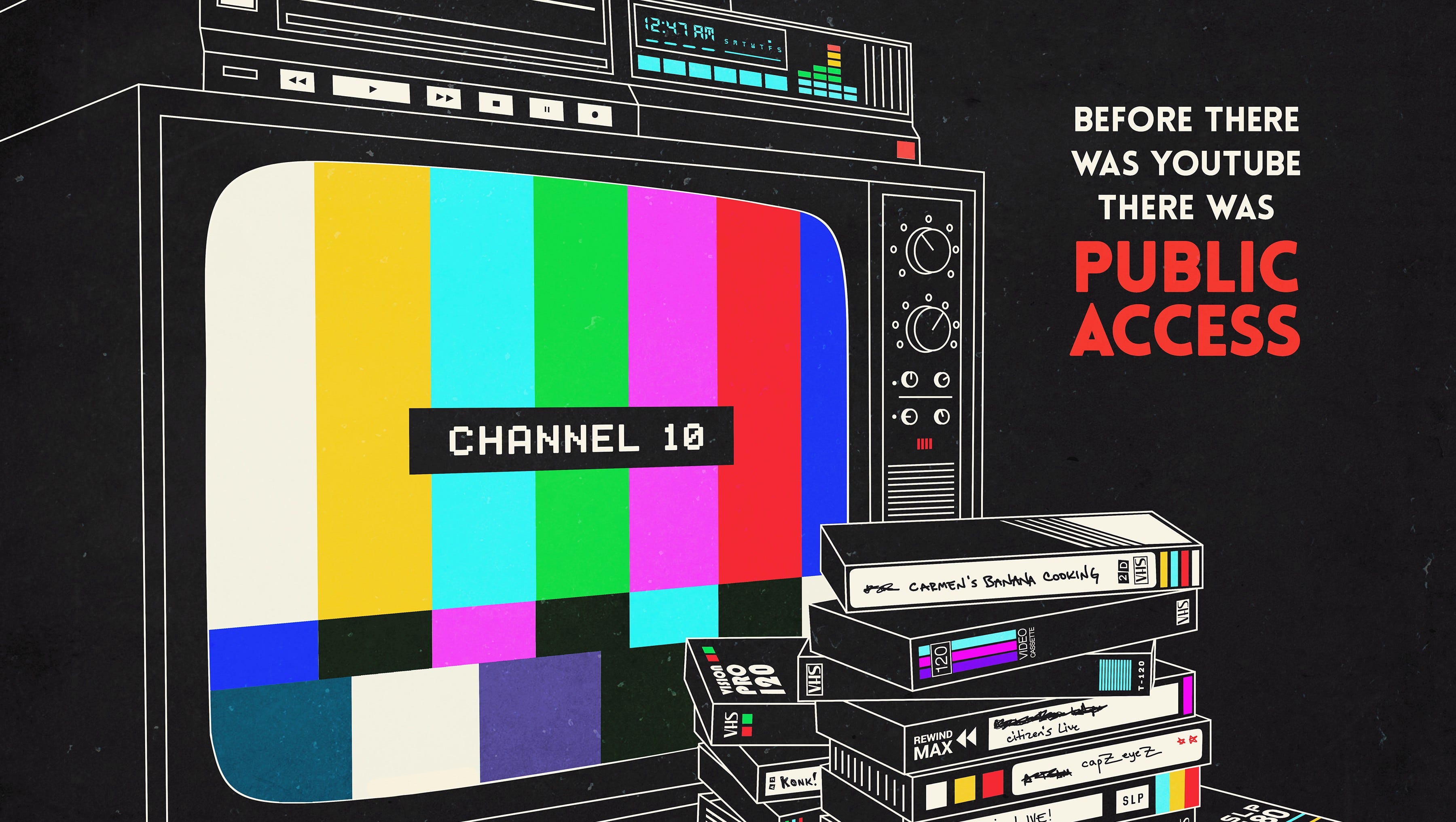
“When We Were Live,” director John Spottswood Moore’s new documentary about the heyday of cable public access TV in Austin, reveres that thrillingly low barrier to entry. The gonzo, crowdfunded, and surprisingly emotional film made its world premiere over the weekend at Fantastic Fest.
Not since Richard Linklater immortalized my childhood neighborhood’s liquor store in “Boyhood” has a film made me feel so connected to my city. You’ll feel a similar pull, no matter your hometown.
Journalism schools love to tell you that newspapers are the first drafts of history. Well, in the 1980s and ’90s, local public access TV stations were history’s legal pad full of scrawled, sometimes illegible notes.
“When We Were Live” raids the crypt of Austin’s ACTV. Consider Carmen Banana, a delightfully crunchy drag queen theming herself around potassium-rich fruit:
Or if not a drag queen, then the denizens of The Drag. I don’t see Christiane Amanpour out in these streets asking people if there’s life on other planets:
Over the course of 10 years, Moore dug through the ACTV archives and edited such artifacts together into a legible narrative. For most of the film, there are no talking heads. The footage flows organically from clip to clip (with occasional voiceover assistance from the folks who were at the scenes of the crimes).
There’s a surprisingly strong—and affecting—message to this deliciously low-budget collage. Every day, TikTok and YouTube hose us all down with videos, both the weird-as-hell and the banal. Day and night. “When We Were Live” argues that no amount of virality can approach the essence of public access.
Services like ACTV cohered around a community. In less media-saturated times, they gave regular people the tools to collaborate on a shared identity, in all its earnest mess. (Feel free to enjoy the irony that some memorable public access clips, including those in the film, now exist as morsels of online content comin’ down the hose.)
From Moore’s director statement:
This is not just the story of Austin. It is the story of countless towns. I talk to people everywhere who have fond memories of flipping through channels and coming across some beautiful no-budget access program. That’s the feeling we want our audience to have.
Maybe it’s the nostalgia blinders talking, but even the (relatively) more polished programming seen in the film feels culturally additive, in a way that Hasan Piker or Trixie Mattel or whatever million-follower streamer jumping on live just doesn’t.
Try to deny the counter-culture electricity of Livia Squires, host of call-in advice show “Ask Livia Live,” reclining on a velvety chaise and shooting straight. In one clip seen in the film, she tells a forlorn stripper that the young woman’s disapproving boyfriend needs to get with the program or get out. When I saw “When We Were Live” at Alamo Drafthouse on Monday, the audience hooted in approval.
Right there—that’s the sweetest juice wrung from this particular orange. A sense of social solidarity. No one would complain if a film like this stuck to ribald metal songs about hamsters, though that’s an undeniable highlight. Through public access, citizens seized the airwaves to urge real, tangible change.
The documentary spotlights ACTV manager Gilberto Rivera, who shed light on stories that just weren’t getting their due on mainstream broadcast stations. The demolition of a historic Chicano mural. Police brutality against Mexican American counter-demonstrators at a city-approved KKK rally.
Sometimes, these weightier topics wafted into the wackiness. I present to the jury the safe-sex adventures of Captain Condom, aired at the height of the AIDS crisis. Ronald Reagan’s presidential library and a battleship should be shuttered and then rededicated to Captain Condom.
I was born in 1989 in Austin and wish this footage felt more like an old pal. As a kid who lived with a TV remote in his hand, local public access programming seemed too weird, too dangerous, too potentially sinful. Almost always, I skipped past it as quick as I could during a surf. (Except when they aired our fifth-grade class news broadcast. I got to be the anchor one semester.)
“When We Were Live” is one more chance with the remote, to stay a while on that channel. Bask in some archival glory. This doc makes me feel like what Austin had to offer was actually mine all along. I’m taking it.
The film never inspires sadness or doom, either. You see artists, queers, and Black and brown people being funny, outspoken, and weird. The most sobering footage reminds you that racists paraded proudly through downtown streets, and half of America wanted to hide AIDS patients in a deep, dark hole. But the home team still made the shit they wanted to make.
If progress starts with a banana and a dream, hey. That still seems pretty doable to me.
Follow “When We Were Live” online for updates on how to see the film in the future. Also, dig into more public access TV clips on their YouTube and Instagram feeds.
One rad thing
Do you need a bop this week? You need a bop. Have a little Billy Ocean.
It’s a little harder to steep in the horrors while listening to 1976’s “Love Really Hurts Without You,” a Motown-y pop gem just pleading for karaoke. I wasn’t familiar with Ocean’s game. To me, he’s synonymous with ’80s soft rock like “Get Outta My Dreams, Get Into My Car” or “Caribbean Queen,” a song I refuse to admit actually contains the words “Caribbean” or “queen.” The lyric sounds more like, “carry you, whee!”
“Love Really Hurts Without You” has a real jaunt to it. There are no silk sheets and sax riffs like those later Ocean hits. The opening rhythm reminds me of “Build Me Up Buttercup,” almost to the point of looking up plagiarism lawsuit records.
As you might guess, the song cruises along on upbeat, lovesick soul the rest of the way. Is there a euphoric key change around the two-minute mark? You bet your Caribbean ass. (Listen on Spotify)
Outbox
City Cast Austin’s Kelsey Bradshaw takes readers into a recently opened exhibit at the Harry Ransom Center featuring the archives of “Saturday Night Live” creator Lorne Michaels.
This bit made me chuckle, which is not something Lorne Michaels has ever made me do:
Michaels reached out to the Harry Ransom Center about donating his archive of work three years ago and, after visiting in 2023, reached an agreement to bring his trove to Austin. No one but him really knows why.
“We’re not really sure, we have some ideas,” Wilson said.
…
The great tragedy of “KPop Demon Hunters,” imo? The songs by the demons are catchier than the ones by the hunters. I know, I know; there’s a textual reason for this in the film! Yet I can’t help but wonder if the world is going to hell because we’re not doing our part to seal the honmoon.
Anyway, the “Switched on Pop” podcast did a fun episode last week explaining the music theory behind the movie’s Billboard-topping songs.
Listen to the episode here. Stream “Soda Pop” by Saja Boys for clear skin.
…
Have we all watched Caleb Hearon’s new HBO Max special, “Model Comedian”? I haven’t had a chance, but I did read his new GQ profile while I was waiting for a movie to start. The special’s probably good, though!
Did you like this issue of Turning Out but can’t swing a paid subscription? You can leave a one-time tip to help me keep writing, via Ko-fi:

